
Quick housekeeping:
If this landed in your Promotions or Spam folder, drag it into your main inbox. Replying works too.
AD: I run The OuterSpark on Beehiiv platform. If you've been sitting on the idea of starting your own newsletter, you can set one up here. Every sign up helps me keep this going, but only do it when you feel ready.
Somewhere above you, a satellite is hunting for another satellite so it can shine a laser at it hard enough to charge its batteries.
On 1 October, two American companies put hardware into orbit to attempt almost exactly that, and both are working through their test campaigns now.
The idea without the physics lecture
Beaming electricity through empty space has been promised since the 1960s, usually by people holding a diagram and little else. What makes things different now is that the diagrams are finally in orbit.

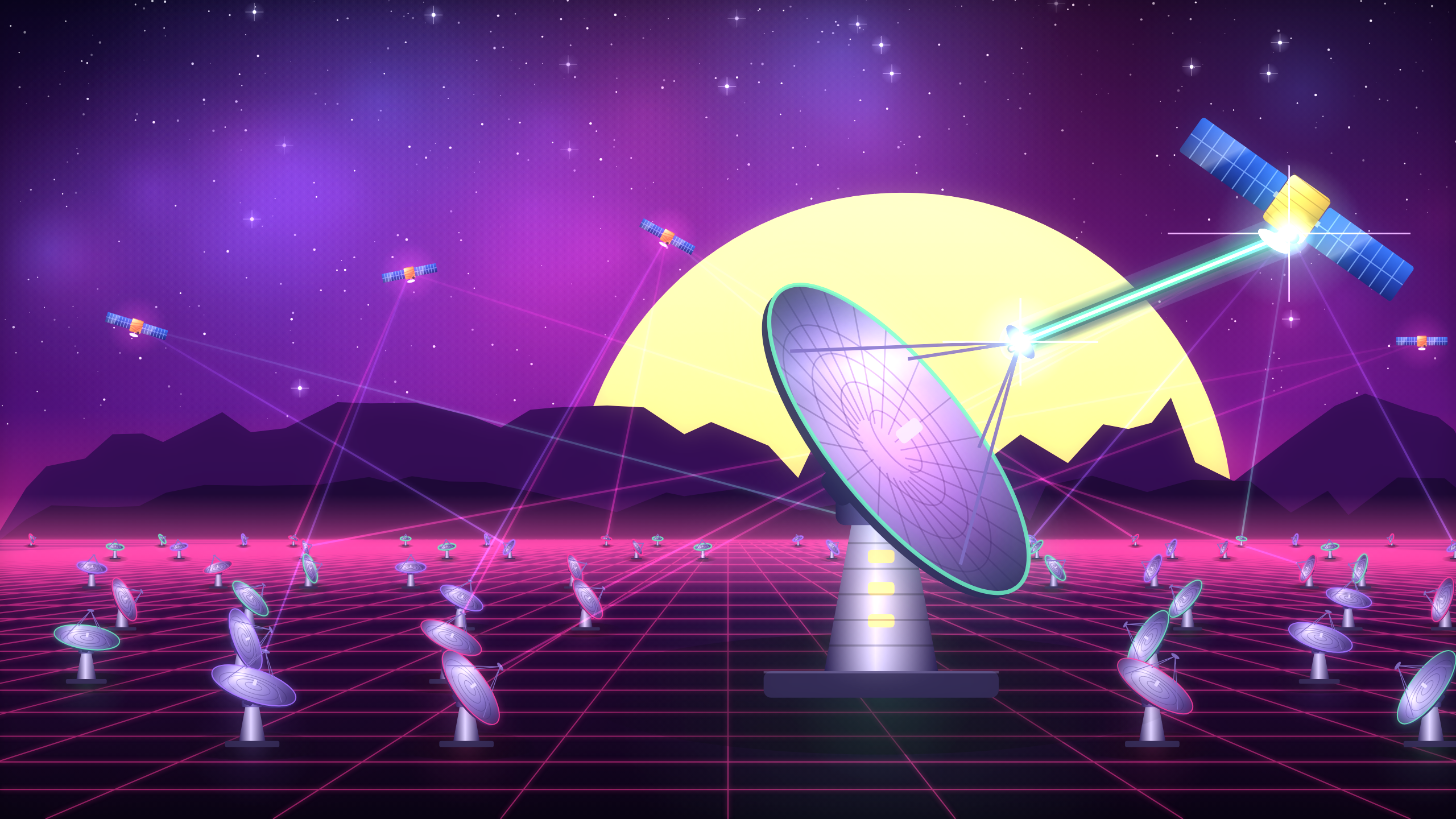
Image. Render of a space-to-space power beaming demonstration in space.
A solar panel does not care whether its light comes from the sun or not. Shine something bright enough at it and it produces electricity all the same. Every scheme in this field is a version of that observation: gather sunlight where it is abundant, squeeze it into a beam, point it at a receiver somewhere it is scarce.
What gets confused, constantly and expensively, is that one idea hides two very different types of businesses.
The first is powering things in space. Also known as in-space power transmission or space-to-space power transmision. Satellites in Low Earth Orbit (LEO) go dark roughly every ninety minutes as they pass behind the Earth. In that shadow region, they survive on batteries that are heavy, degrade fast, and displace the payload that the operator actually wanted to fly. The Moon is worse. Night there lasts a fortnight and gets cold enough to kill a rover outright, which is why most lunar missions are designed to die politely after fourteen days.
The second is powering Earth. This is commonly known as Space Based Solar Power (SBSP). Orbit sees the sun around the clock, no weather and no night, so a large enough array could in principle deliver clean, constant electricity to a ground station. A far more exciting pitch, and a far harder business.

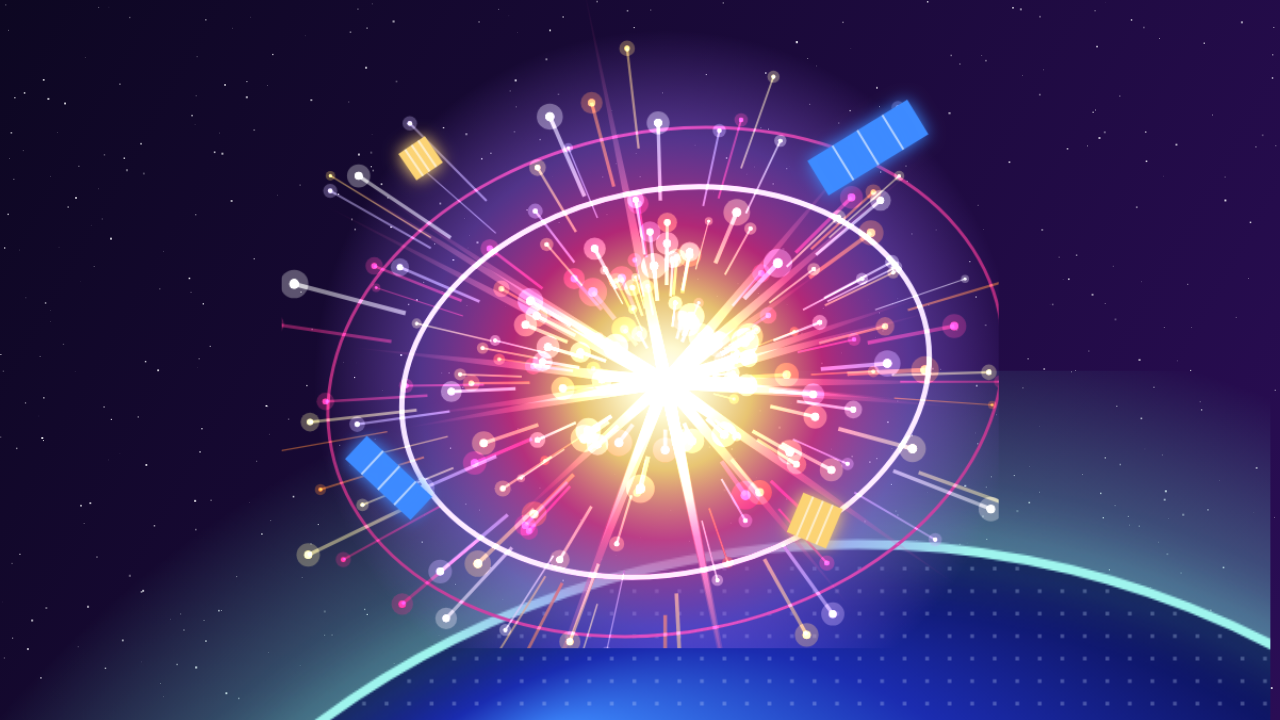
Image. Render of a space-to-Earth power beaming demonstration.
Who are the power beaming innovators?
Star Catcher, based in Florida, launched its Protostar demonstrator on 1 October alongside a small target satellite. Its approach is quietly shrewd: rather than asking customers to fit a bespoke receiver, it concentrates sunlight and retransmits it at wavelengths ordinary satellite panels already absorb, so a client needs no modification at all. It beamed 1.1 kilowatts to panels at Kennedy Space Center last year, has raised $65m, and claims ten power purchase agreements and over forty letters of intent.
Cowboy Space, which spent its first two years as Aetherflux, launched Reason-1 the same day. It carries a kilowatt-class laser, though the opening target is modest: somewhere between 30 and 100 watts delivered to a patch of ground ten to twenty metres across. Unimpressive as a number, unprecedented as an achievement, if it lands.
Elsewhere the work splits by destination. Volta Space, out of Montreal, is going after the lunar night, with a laser receiver flying on Firefly's Blue Ghost Mission 2 to the Moon's far side as the first node of a planned orbital grid. In the UK, Space Power has worked with the University of Surrey on satellite-to-satellite beaming aimed at the eclipse problem, and I should say that I was an early co-founder before leaving during COVID. Space Solar, also British, points the other way entirely, with an agreement to supply Iceland by 2030.

Image. Power meaning during a Lunar night.
Luxembourg's TerraSpark raised €5.4m on a sequencing argument cleverer than its size suggests: sell wireless power on Earth first, at live events, using the revenue and regulatory paperwork as a run-up to orbit. Japan flies OHISAMA this financial year, a 180kg satellite with 720 watts of solar that will try to send microwaves to a 64-metre dish and light an LED. Tiny, and still the first real space-to-Earth transmission if it works. China has described a kilometre-scale array, contingent on a rocket that has not yet flown.
The technolgoy gates that decides the future
Strip away the renderings and a handful of problems stand between here and anything industrial. None are mysterious. All are unsolved at scale.
Pointing. Holding a beam on a target moving at eight kilometres a second, across hundreds of kilometres, while both objects vibrate. This is what the October launches are testing, and the gate most likely to produce an answer within weeks.

Image. Pointing systems needs to be extremely precise even at massive distances.
End-to-end efficiency. Energy is lost at every stage: collecting, converting, transmitting, receiving, converting again. Multiply five lossy steps together and a system that reads fine on paper returns a fraction of what it gathered. Until somebody publishes an honest round-trip figure from orbit, every business case here rests on an assumption.
Waste heat. A kilowatt-class laser throws off a lot of heat, and in the vacuum of space the only way to shed it is to radiate it. Radiators are heavy, and mass is the thing you were trying to save.
Aperture. The one that quietly kills most space-to-Earth plans. Beams spread as they travel, which locks transmitter size and receiver size together by geometry. Serious power from high orbit implies a transmitter close to a kilometre across and a ground site several kilometres wide. That is not an engineering refinement. It is a civil engineering project in two places at once.
Assembly. Nothing of that size launches in one piece, so it has to be built in orbit by robots, repeatedly and reliably. That capability does not currently exist at anything approaching the required scale.
Regulation. No regulator has a settled framework for a satellite that deliberately fires kilowatts at the ground. Beam limits, aviation exclusion zones and spectrum rights all need writing before the first commercial watt is sold.
Cost. The final gate, and the least discussed. Space solar does not have to be impressive. It has to beat a field of panels in Spain on price per kilowatt-hour, including launch.

Image. Rendering of a robot fitting a panel onto a long solar truss in orbit.
Final thoughts
Results from those two October missions will probably come within the next few weeks. If they can show that they can deliver usable power between two objects in orbit, the conversation will then shoft to how much the future versions cost.
Power beaming, is a very faciniting niche in the space economy. So much so that, this became my entry into the space industry. Go check out some of these companies and what they are doing. Maybe you will get inspired to lead some of the future developments in technology in this field.
Till next time!
Ricky